
A groundbreaking study has revealed the unique "voices" of one of the world’s rarest dolphins.
Researchers from the Marine Mammal Foundation and Curtin University have completed the first detailed acoustic analysis of the Burrunan dolphin (Tursiops australis); a critically endangered species found only in Australia’s southern waters.
The ground-breaking research, published in top journal “Royal Society Open Science", draws on over 20 hours of underwater recordings collected between 2016 and 2023. The study identified more than 12,000 vocalisations, ranging from melodic whistles to rapid-fire burst-pulse sounds, produced by the two known resident Burrunan populations in Port Phillip Bay and the Gippsland Lakes, Victoria.
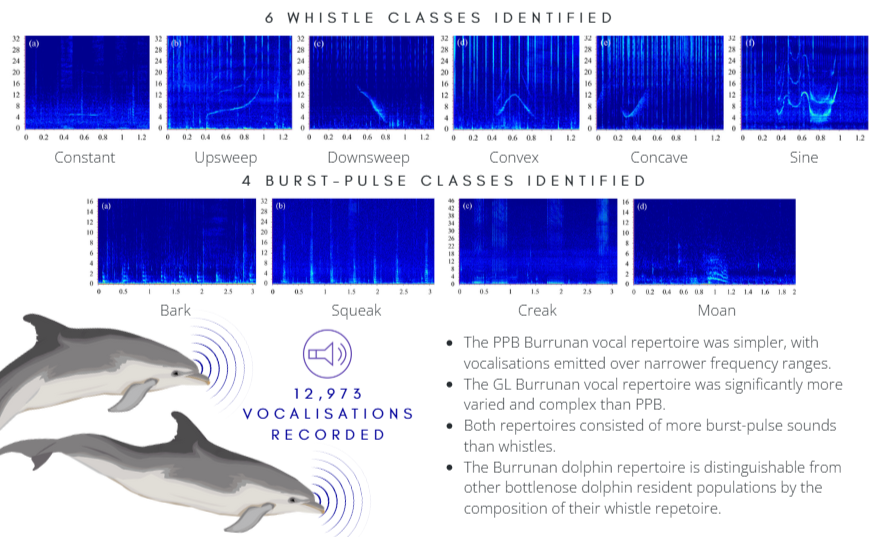
Lead author Amber Crittenden said the findings provide an essential foundation for understanding how Burrunan dolphins communicate, interact, and respond to their environment.
“Each population has its own vocal repertoire,” she explained.
“We discovered that Gippsland Lakes dolphins have a more varied vocal range, whereas the dolphins in Port Phillip Bay use a more simplified set of sounds, likely due to higher noise levels in the busier, urban environment.” said Crittenden.
The study also highlights that Burrunan dolphins use burst-pulse sounds more often than previously recorded in other bottlenose dolphin species across Australia, suggesting unique behavioural and social patterns.
“By comparing the sounds that the Burrunan dolphins make to other bottlenose dolphins across Australia, we can see and hear, for the first time, the differences that make this species unique.”
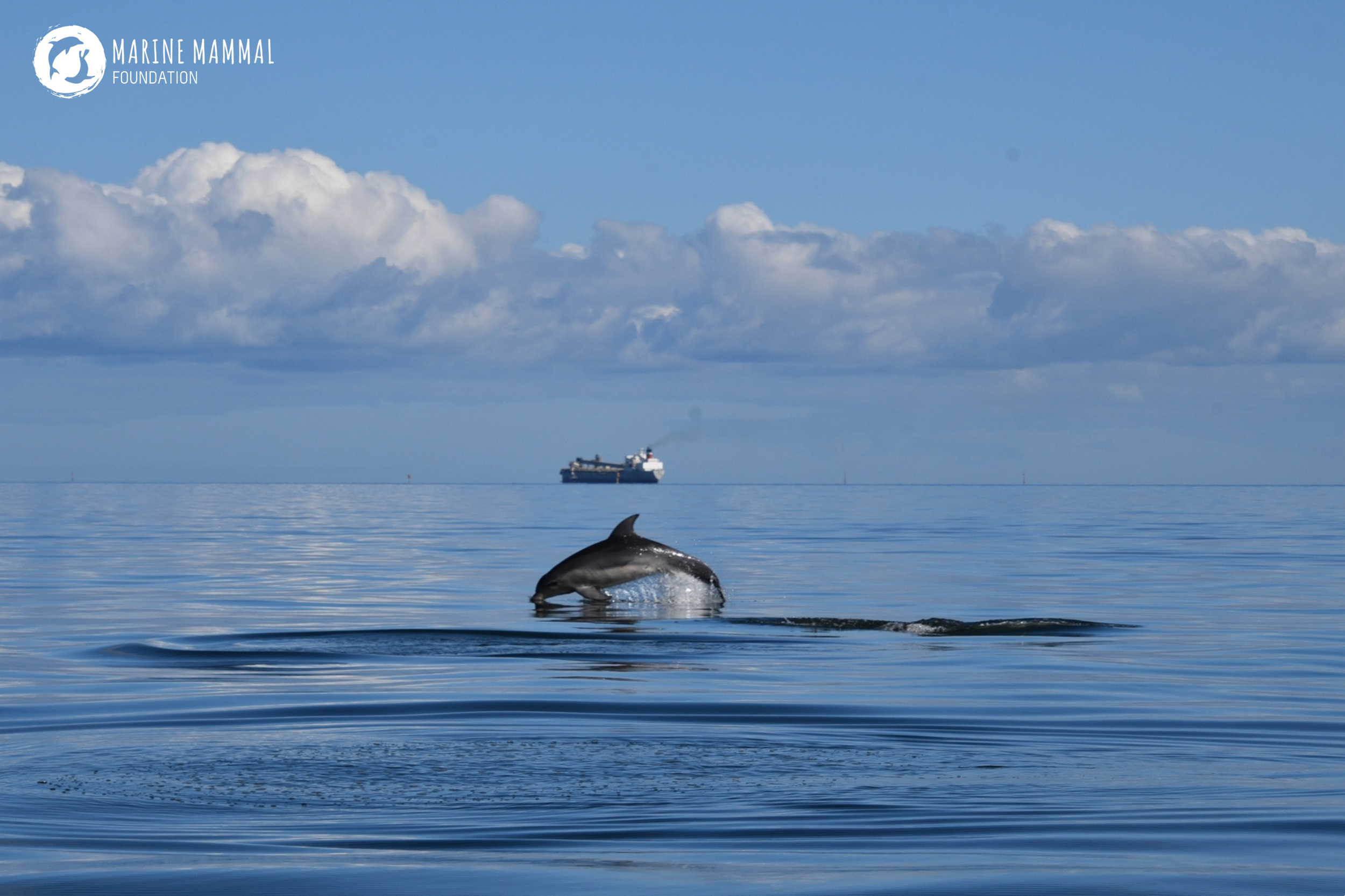
A Burrunan dolphin in Port Phillip Bay leaping out of the water with a large conatiner ship underway in the background.
Within noisy marine soundscapes, with high shipping and vessel activity, it is vital to understand the repertoire of vocalising species, and build upon this knowledge in ongoing acoustic studies.
With fewer than 250 Burrunan individuals in Victoria, this research offers critical tools for non-invasive monitoring using passive acoustic technology, helping scientists listen for dolphins without needing to spot them visually.
The Burrunan dolphin was first described as a separate species in 2011 by Marine Mammal Foundation Director, Dr Kate Robb, also a co-author on this study.
“Understanding the dolphins ‘language’ helps us not only identify the importance of sound to the dolphins, but also identify areas of significance, as many of these sounds relate to things like feeding and social behaviour, group cohesion, and can even represent their ‘names’” she said.
“As threats from vessel traffic, pollution, and noise increase, this acoustic baseline will help detect shifts in dolphin behaviour and health, improving conservation efforts for this iconic species.”
The full study is available from the Marine Mammal Foundation and partner institutions.
For interviews or more information:
research@marinemammal.org.au
Additional Images and sound files available on request.
Follow @marinemammalfoundation on Instagram
LINKS:
Crittenden, A., Erbe, C., Street, A., Wellard, R., Robb, K. (2025) Burrunan babble: acoustic characterization of the whistles and burst-pulse sounds of a critically endangered dolphin. Royal Society Open Science. http://doi.org/10.1098/rsos.241949